Figma announces new features to define how agents work on its platform
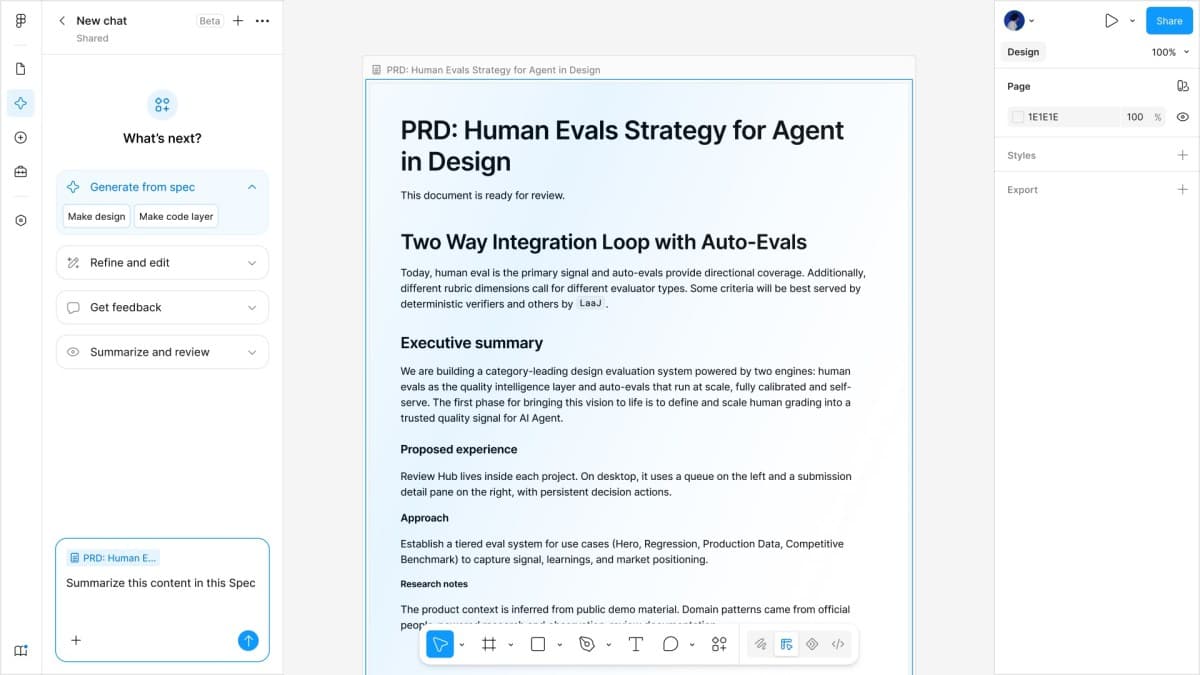
Figma introduces new features designed to specify how AI agents operate within its platform, alongside releasing its code layers capability in open beta testing.
The best new AI tools and the news behind them, every morning.

Figma introduces new features designed to specify how AI agents operate within its platform, alongside releasing its code layers capability in open beta testing.
Ricursive Intelligence is developing AI systems that autonomously design semiconductor chips, learning from each iteration to improve subsequent designs. The approach aims to automate and accelerate chip design to address growing compute constraints in AI development.

Gudea uses AI to monitor social media and websites to detect and help organizations prevent potential crises before they escalate into major public controversies. The platform tracks narratives across conversations to identify risks from misinformation, hate speech, and damaging rumors.

Microsoft releases Decision-1, a model designed for fast decision-making tasks. The tool aims to improve speed and efficiency in decision-based workflows.

Terence Tao discusses what mathematicians need to understand about Lean, an automated theorem prover, covering its reliability and integration with AI systems. The post addresses practical considerations for mathematicians considering adoption of formal verification tools.

Typesafe AI, an AI infrastructure company, has completed a funding round at a $7.5 billion valuation. The round raised $870 million in capital.

CockroachLabs explores a five-month experiment comparing bug-fixing processes to medical hospital workflows, treating coding agents as specialized teams working collaboratively on software issues. The approach examines how healthcare coordination models might improve how AI systems and teams diagnose and resolve bugs.

Researchers applied AI analysis to historical archives spanning 400 years and discovered previously overlooked items including a forgotten meteorite and evidence of lost rhino populations. The approach demonstrates how machine learning can surface new findings from existing digitized collections by identifying patterns humans might miss.

A GitHub repository provides a tool enabling AI agents to draw arrows, boxes, and text directly onto screen output. The project appears to support visual annotations and UI elements for agent-based applications.

Nvidia announces a significant new investment in AI infrastructure and technology development, expanding its commitment to the artificial intelligence sector.

The US has restricted access to China's DeepSeek AI platform within government agencies. Separately, a new AI tool has been developed to predict cancer patient survival outcomes.

Spotify has signed a licensing agreement with Believe Music to develop an AI remixing tool. The deal establishes rights frameworks for using artist content in AI-generated remixes.
California has launched a new state AI tool designed to assist job seekers in Southern California. The tool leverages artificial intelligence to help users with job search processes, though specific features and capabilities are not detailed in the available information.
Amazon has released TorchNeuron, a developer tool designed to optimize PyTorch workloads for its Trainium chips. The tool helps developers more efficiently train models on Amazon's custom AI hardware.

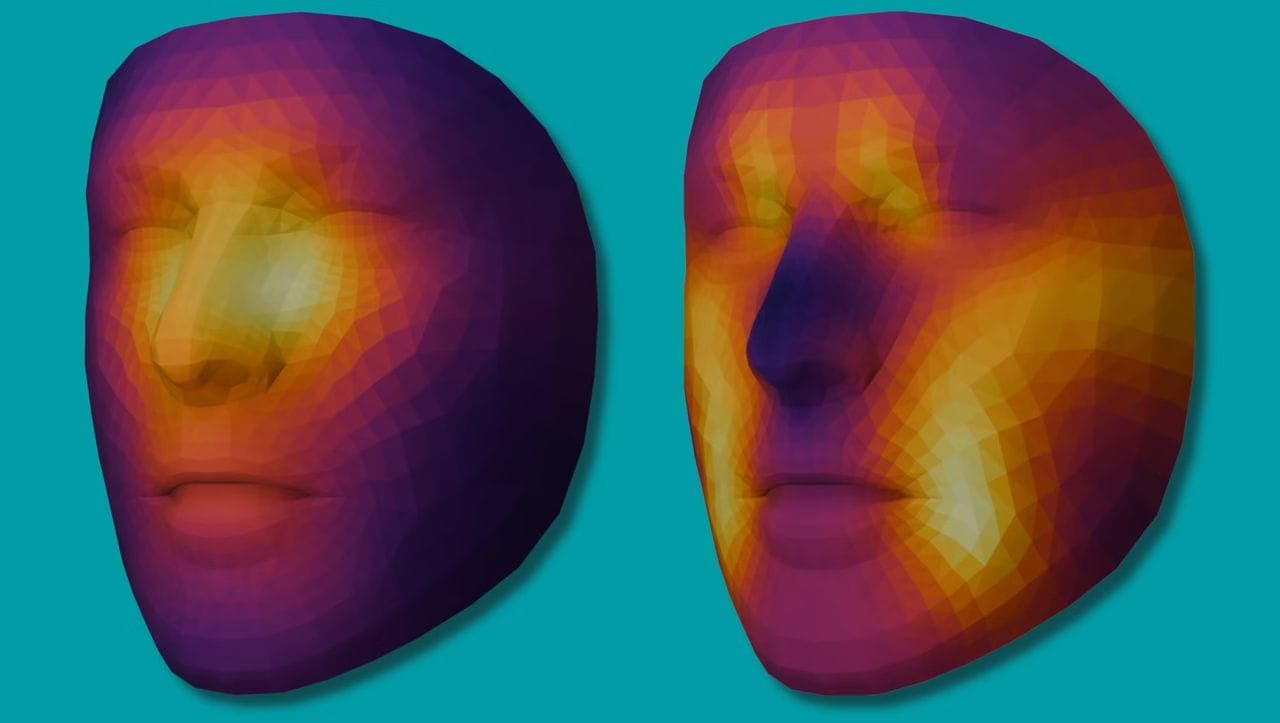
A new AI tool analyzes medical photos to predict cancer patient survival risk. The system leverages image analysis to assess patient outcomes and inform clinical decision-making.

Adobe has released a new AI tool that automatically opens closed eyes in photos by analyzing and learning from a user's existing image library. The tool integrates with Adobe's photo editing suite to improve portrait results without requiring manual selection or complex editing.

Nurses report that technology implementations in healthcare settings are degrading their work conditions and patient care quality. The article examines concerns from nursing professionals about how digital systems are affecting their ability to provide effective care.

This article compares top smartwatch models from Apple, Google, and Samsung for 2026, evaluating their features and performance.

A lifetime subscription to AskAnyModel's AI Pro Plan grants permanent access to ChatGPT, Claude, Gemini, and Grok for a one-time $39.99 payment. The service consolidates multiple AI models into a single interface.

Article addresses strategies for managing family members' sharing of children's photos on social media platforms without permission.

A Kogi State Commissioner backs artificial intelligence training initiatives as part of preparations for Nigeria's 2027 presidential election, reportedly supporting incumbent Tinubu's re-election campaign.

Google Labs VP Josh Woodward argues that companies need to establish dedicated major and minor tracks for AI work to balance innovation with core business operations. The dual-track approach allows organizations to pursue experimental AI initiatives while maintaining stability in existing product lines.

The Model Context Protocol (MCP) is emerging as a potential standardized foundation for building intelligent, decentralized search systems that operate across distributed networks.

Flock's CEO claims the company's acoustic detection microphones identify only gunshots, but the website marketing describes broader surveillance capabilities. The discrepancy has drawn criticism from privacy advocates and the ACLU over potential misuse of the technology.

YouTube Music introduces new labels to identify AI-generated and AI-assisted music on its platform as artificially created tracks increasingly populate streaming services. The labels distinguish between fully AI-generated songs and tracks with partial AI involvement in composition or vocals.

Apate.ai deploys AI agents to deliberately engage with scam operations and fraudulent schemes to gather intelligence on fraud tactics and patterns. The approach uses AI's ability to interact at scale to identify and document emerging fraud methods for research and prevention purposes.

Deezer is implementing a filter feature that allows users to exclude AI-generated music from their listening experience. The toggle will be available to users by the end of the year.

Zenzap, an AI-powered chat application designed as a workplace alternative to WhatsApp, has secured $44 million in funding. The platform is already deployed at major companies including Starbucks and Taco Bell.

An analysis examining OpenAI's work in relation to the partition principle and mathematical foundations. The piece explores connections between AI systems and mathematical theory without providing specific new tool announcements or breaking news.

A global initiative commits $1.8 billion toward preparing biological data for AI applications. The effort aims to standardize and make biological datasets more accessible for machine learning research and development.