Five Qwen3.8-27B models match Fable 5 Using GVS5H Harness
Five quantized Qwen 3.8-27B models achieve performance parity with Fable 5 when evaluated using the GVS5H harness, a benchmarking framework available on GitHub.
github.comrzk
The best new AI tools and the news behind them, every morning.
59 itemsclear
Models and libraries you can run yourself.
Five quantized Qwen 3.8-27B models achieve performance parity with Fable 5 when evaluated using the GVS5H harness, a benchmarking framework available on GitHub.
Dessa presents a full-duplex speech model capable of simultaneous bidirectional conversation, claiming authenticity in real-time voice interactions. The model represents advancement in conversational AI systems that can handle overlapping speech and natural dialogue flow.
OpenShell is NVIDIA's runtime environment designed to safely execute multiple autonomous AI agents in distributed systems while maintaining privacy protections. The project enables secure orchestration of agent fleets through a dedicated runtime framework.
Hugging Face has released a new AI biology model that enables conversational interaction with DNA sequences. The model allows users to query and analyze genetic information through natural language, bridging computational biology and accessible AI interfaces.

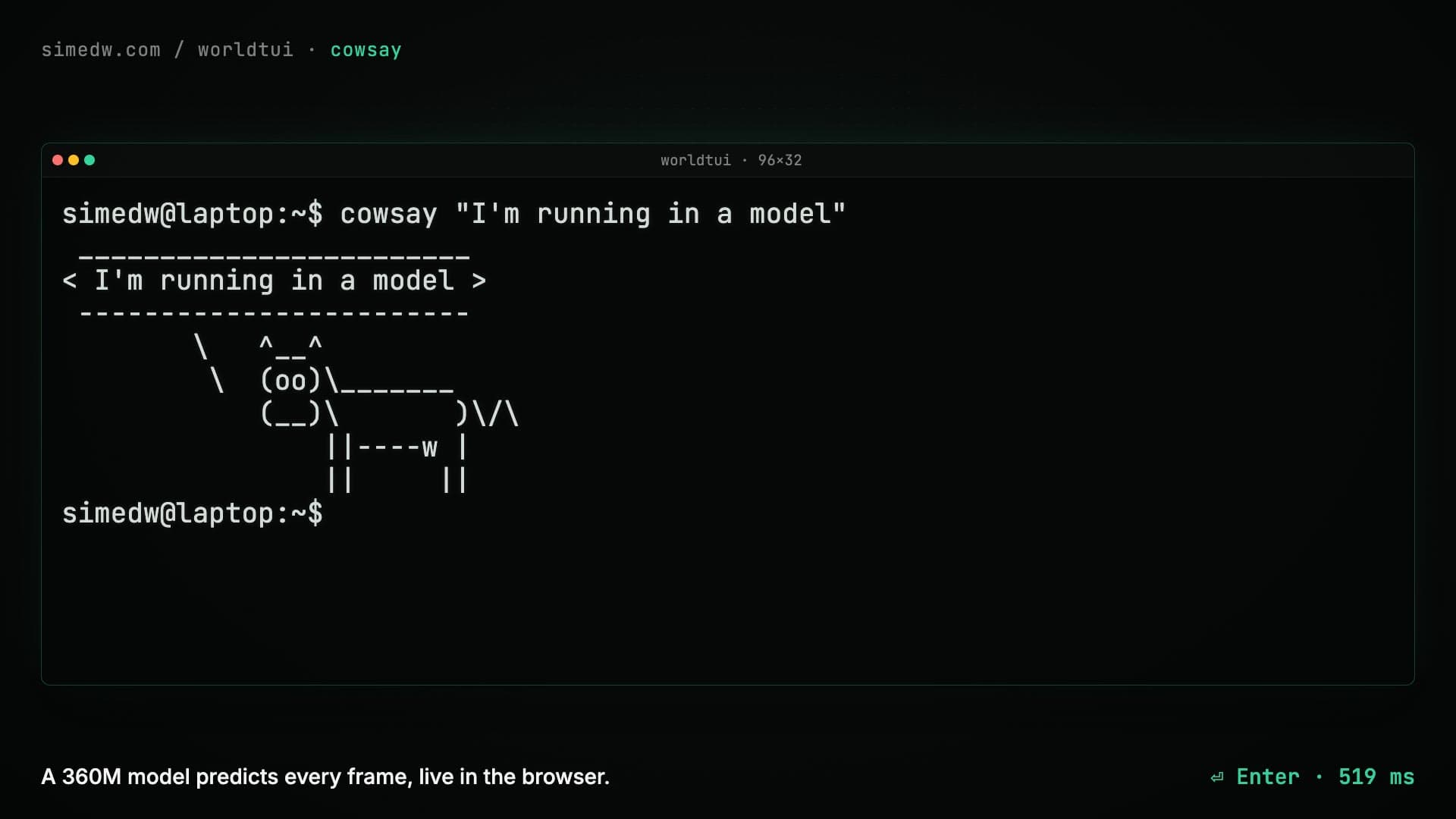
WorldTUI is a 360M parameter model trained to simulate terminal behavior and output. The project demonstrates using smaller models for interface emulation tasks rather than general-purpose applications.
Recursive has released Flint, a free coding model designed to run on laptops, developed primarily through its own AI research system. The release serves as an early demonstration of self-improving AI capabilities.

DeepSeek has open-sourced a new tool designed to reduce AI inference costs and compete with closed-source AI systems. The release represents the company's strategy to make AI more accessible and cost-effective through open alternatives.
DeepInfer is an inference framework optimized for running DeepSeek models with high performance. It provides infrastructure to deploy and execute these models efficiently.
Mistral has released Timestral, a foundation model designed specifically for time-series forecasting tasks. The model builds on Mistral's existing capabilities to handle temporal data prediction.
Hybrid Reasoning Agents is a framework enabling LLM agents to perform reasoning in latent space while executing actions through text. The approach combines internal non-textual reasoning with external text-based interactions, available as an open-source implementation.

Sphinx is a free and open-source hook that integrates with coding agent workflows to quiz developers on their understanding of code before production deployment. It automatically triggers questionnaires when code is pushed to production, ensuring developers comprehend the changes being shipped.
An open-source emulator enables offline play for NFS 2015, a game previously requiring always-online connectivity. The EU declined regulatory action on server shutdowns for online-dependent games.

The Model Context Protocol (MCP) is emerging as a potential standardized foundation for building intelligent, decentralized search systems that operate across distributed networks.
DeepSeek releases v4.1-Flash-1017, a lightweight language model variant optimized for faster inference and lower resource requirements. The model is available on Hugging Face and OpenRouter for immediate use.
A developer has enabled Llama.cpp, a C++ implementation of the Llama language model, to run on a jailbroken PlayStation 5 console, allowing native execution of GGUF-format models on the hardware.
StarSkirmish Bench, a benchmark testing LLMs in StarCraft gameplay through code generation, has been updated with results from flagship models by OpenAI, Anthropic, Google, and Muse. The benchmark measures how well these models can handle complex strategic decision-making in a real-time strategy environment.
Meta has released Muse Spark Open, an open-weight AI model designed to run locally on Apple silicon Macs through a partnership with Apple. The model enables on-device inference without requiring cloud infrastructure.

Meta releases Muse Spark Open, an open-source AI model available on Hugging Face. The model is released for public use and research purposes.

Liquid AI releases LFM2.5-24B-A2B, a 24 billion parameter model optimized for fast, on-device agent execution. The model enables running autonomous agents directly on local hardware without cloud dependency.
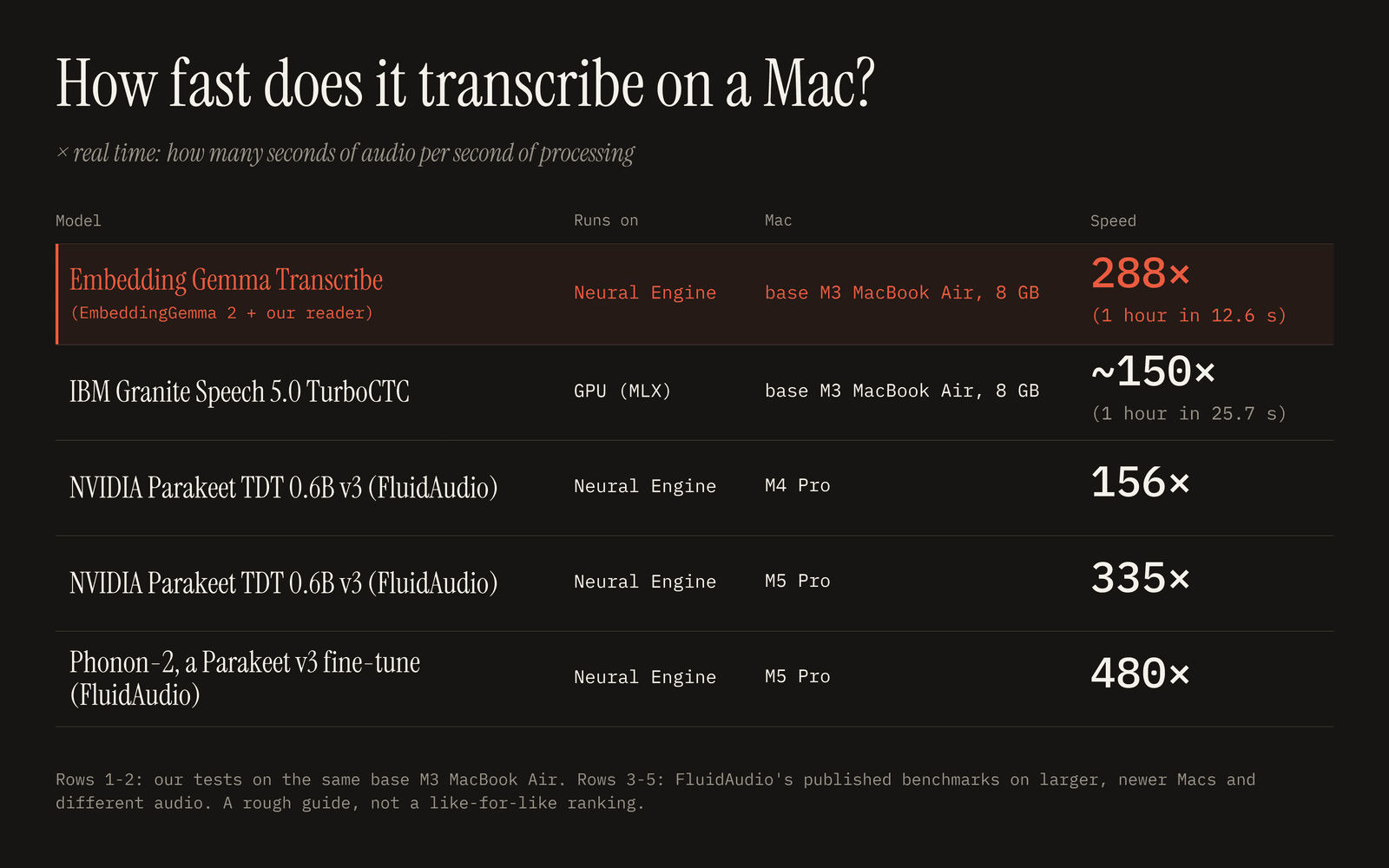
A developer created a speech-to-text model by adapting EmbeddingGemma 2, Google's lightweight embedding model, for audio transcription tasks. The implementation is available for experimentation at the provided URL.
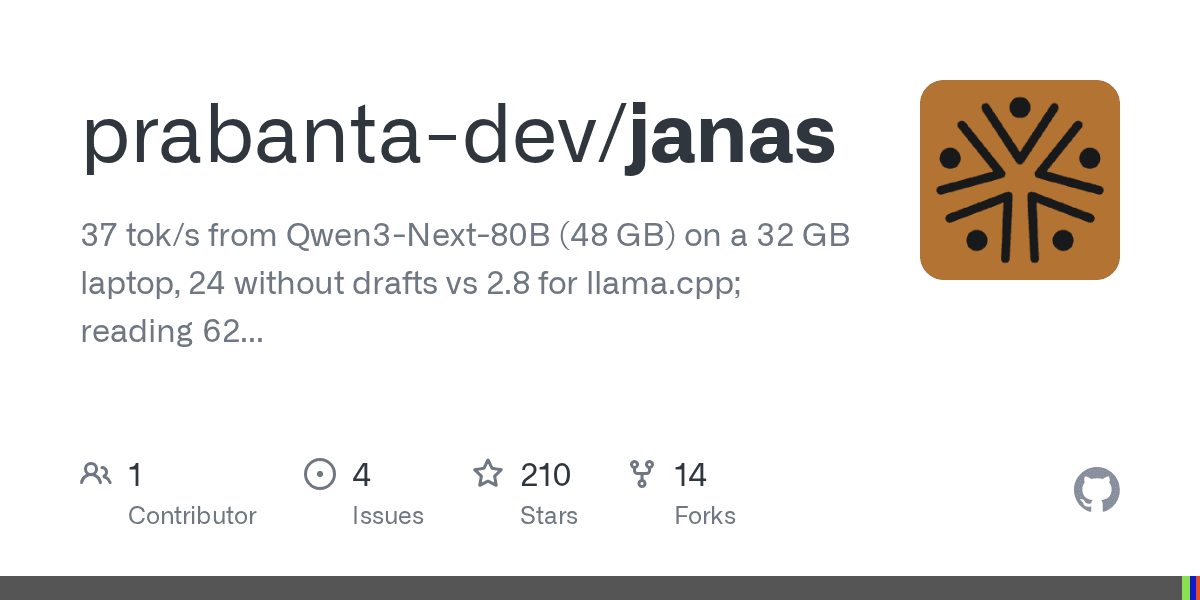
Janas is an open-source project that enables running large language models exceeding available RAM by streaming model experts from SSD storage. This approach allows users to work with larger models than their system memory would normally permit.
QGIS, the open-source geographic information system, has implemented a ban on contributions created or modified with AI assistance. The policy restricts code, documentation, and other submissions that involve AI tools in their creation or editing process.
Talorys is a self-hosted personal AI agent that runs on Cloudflare's free tier, enabling users to deploy an autonomous AI assistant without incurring hosting costs. The project is available on GitHub for developers interested in running their own AI agents.
ONLYOFFICE 10.0 introduces AI-powered features, modular application architecture, and enhanced security measures to its open-source office productivity suite. The update expands functionality while maintaining the platform's self-hosted and open-source nature.
A new transfer learning tool enables weather satellite data and models to be shared and applied across different satellites and observation scenarios. The approach combines physics-based constraints with machine learning to improve data efficiency and model generalization.

A GitHub repository provides a tool enabling AI agents to draw arrows, boxes, and text directly onto screen output. The project appears to support visual annotations and UI elements for agent-based applications.
AWS has released an open-source sandbox environment for AI agents designed to prevent uncontrolled autonomous agent behavior. The tool enables developers to test and contain agent actions before deployment in production systems.

Researchers have formalized a computer-assisted proof demonstrating the optimal packing configuration for 11 squares within a unit square. The work combines automated reasoning with mathematical verification to solve a long-standing geometric problem.
Strands introduces Decider 2B, a compact open-source model designed for decision-making tasks. The model appears positioned as a lightweight alternative for applications requiring autonomous decision capabilities.
OpenAI publishes resources on AI progress in mathematics, including GitHub repositories with preprints and code. The release demonstrates advances in applying AI systems to mathematical problem-solving and theorem proving.