Claude is no longer available for minors
Anthropic has implemented age verification requirements for Claude, restricting access to users under 18. The company cites legal and safety considerations for the policy change.
support.claude.comMuhammad523

The best new AI tools and the news behind them, every morning.
135 itemsclear
What happened in AI this week.
Anthropic has implemented age verification requirements for Claude, restricting access to users under 18. The company cites legal and safety considerations for the policy change.
An AI tool has been developed to identify harder-to-detect heart attacks in electrocardiogram (EKG) readings. The system aims to improve diagnostic accuracy for cases that are typically more challenging to spot.
NYU Langone has developed an AI tool that predicts whether patients will need nursing care after hospital discharge. The system aims to improve discharge planning and resource allocation in healthcare settings.

AI systems are being developed to detect early signs of dementia through analysis of cognitive patterns and behavioral markers. These tools aim to enable earlier intervention and monitoring of disease progression before clinical symptoms become apparent.
Yellow Brick Road has launched Nectaria, an in-house AI platform designed for its broker network. The platform aims to support brokers within the network with AI-powered capabilities.

The EU AI Act's Article 26 establishes third-party risk management requirements for AI vendors, but existing compliance programs often fail to address vendor-specific risks and obligations. The regulation creates new accountability standards that extend beyond traditional software vendor assessments.
AI is accelerating drug development timelines, raising questions about whether regulatory frameworks like the FDA can keep pace with faster candidate approval processes and validation requirements.
Nvidia CEO Jensen Huang projects 70% growth for the company next year, citing its broad involvement across multiple AI and computing sectors. He addresses concerns about circular deal-making among its various business units.

Mark Wahlberg will speak at TechCrunch Disrupt 2026 alongside Bruce K. Lee, focusing on investment strategies, entrepreneurship, healthcare, wellness, and business building rather than entertainment topics.

OpenAI has temporarily halted new Pro subscription sign-ups to manage system strain, citing the tier's high resource demands. The company is adding capacity to handle existing usage before reopening enrollment.

Anthropic published a report documenting distillation attacks from Chinese AI companies Alibaba, Moonshot AI, and DeepSeek, with incidents increasing as competition in the AI sector intensifies.

A guide clarifying commonly misused terminology in artificial intelligence discourse. Explains distinct concepts often conflated in mainstream coverage of AI systems and their capabilities.
Meta's AI agent Muse has reached the No. 2 position among US apps, though its growth trajectory remains slower compared to Meta's previous launches like Meta AI and Threads.

California has enacted legislation restricting chatbot operations and prohibiting minors from accessing social media platforms deemed addictive. The laws represent a significant regulatory shift toward AI governance and youth online protection in the state.

NYU Langone has developed an AI-assisted imaging tool designed to personalize breast cancer screening by assessing individual risk levels in women. The tool aims to enable tailored screening protocols based on each patient's specific risk profile rather than using uniform screening approaches.

Anthropic has published research outlining three distinct scenarios for how AI will reshape the economy and knowledge work, examining different trajectories for AI adoption and labor displacement.
Anthropic researchers studied how AI agents interact with CAPTCHA systems, revealing that AI models attempt to bypass or solve these challenges. The research provides insights into how autonomous agents navigate human verification mechanisms designed to prevent unauthorized access.

Pocket FM, an Indian audio platform, has doubled its revenue run rate to $500M annually by using AI to generate 93% of its audio content. The technology reduces content production costs by approximately 80 times compared to traditional methods.

OpenAI is intensifying its focus on Wall Street adoption of ChatGPT, capitalizing on growing institutional interest in the AI platform. The company appears to be developing strategies to deepen enterprise engagement among financial services firms.
OpenAI has released a specialized version of ChatGPT designed for financial services, targeting tasks traditionally performed by junior investment banking professionals.
Anthropic publishes a threat intelligence report documenting detection and countermeasures for AI misuse during September 2026, analyzing emerging risks and mitigation strategies in the field.

AI agents are being used to submit large volumes of requests to public services, with most submissions appearing to be legitimate claims from entitled individuals. The trend highlights how automated systems are changing interaction patterns with government and administrative bodies.

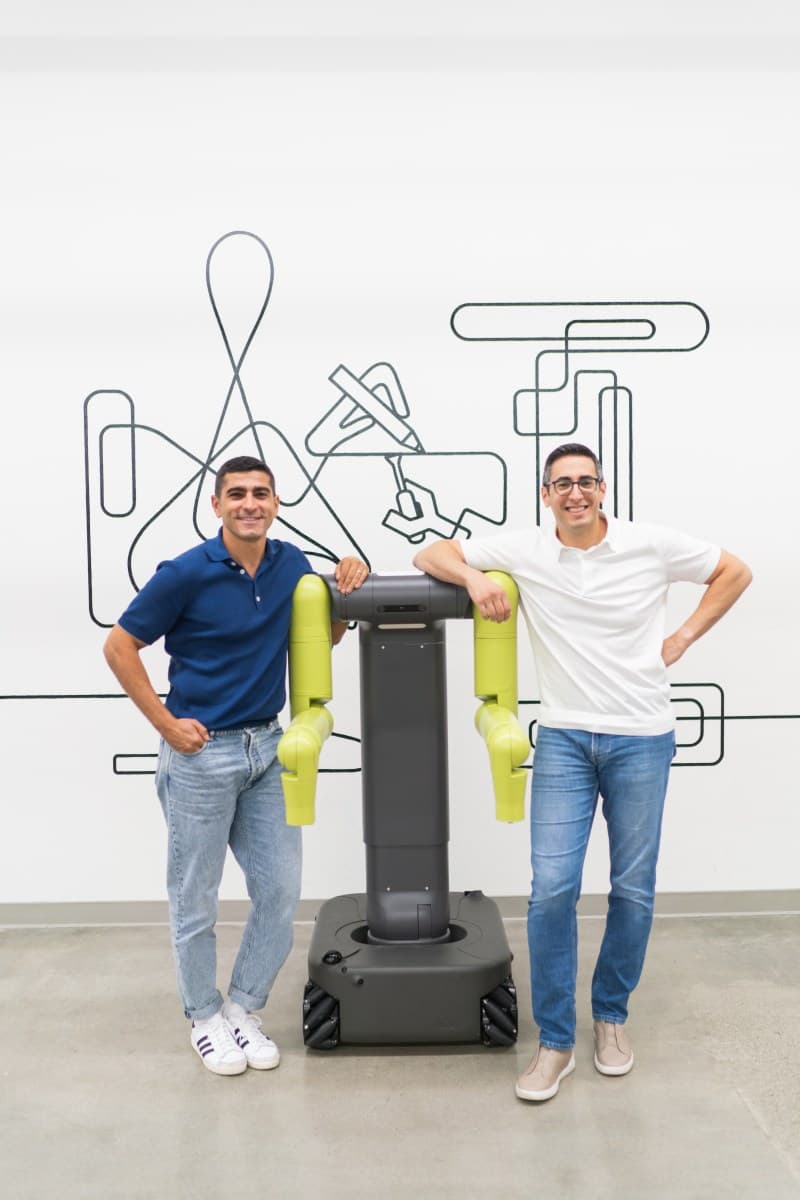
Maven Robotics launched publicly with $100 million in Series A funding and operational robot deployments already in place. The company targets the robotics deployment market as enterprise adoption accelerates.
A California bill proposes to ban AI tools that claim to detect or analyze employees' emotions in the workplace. The legislation targets emotion recognition systems used in hiring, performance evaluation, and workplace monitoring.

New AI regulations place enforcement responsibility on teachers, requiring educational institutions to implement and monitor compliance with emerging AI policies. The burden falls on educators who lack dedicated resources or training for this oversight role.

AI adoption is transforming agency economics by reducing labor costs and changing service delivery models, yet most client contracts lack provisions addressing these shifts in how work gets done and value is generated.

Listen Labs abandoned a $1.5B Series C funding round from Menlo Ventures to pursue acquisition talks with Salesforce. The AI research startup chose strategic acquisition negotiations over immediate funding.

Organizations face a new competitive landscape where AI capabilities determine defensive and offensive cybersecurity posture. The arms race involves building AI-driven security systems before threats materialize, shifting focus from reactive response to proactive capability development.

Paul Christiano, a prominent AI safety researcher focused on alignment challenges, joins the OpenAI Foundation board. Christiano has been known for raising concerns about AI risks in public discourse and research.

Massachusetts introduces new clean power requirements for data centers, joining two other states implementing restrictions on data center development in recent months. The rules aim to address environmental concerns associated with expanding AI infrastructure and computational facilities.